
India's macroeconomic situation is improving fast and the country's GDP growth will turn positive in the third and fourth quarters of the current financial year, eminent economist Ashima Goyal said on Sunday. Goyal in an interview to PTI said the management of the COVID-19 pandemic and gradual unlocks announced by the government have helped in avoiding multiple COVID-19 peaks. The growth estimates by different agencies are being continuously revised, she said.
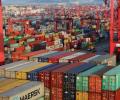
India's merchandise exports in May rose by 20.55 per cent to USD 38.94 billion, while the trade deficit ballooned to a record USD 24.29 billion, according to government data released on Wednesday.

'If it doesn't, it will continue with measures to infuse liquidity, signalling a new cycle,' predicts Tamal Bandyopadhyay.
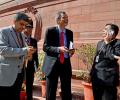
'We now look at divestment as an opportunity for maximising the value of public assets, not necessarily as a short-term resource-raising measure.'
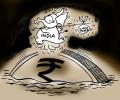
Fitch Ratings on Wednesday said India's high fiscal deficit would pose a challenge in lowering the debt to GDP ratio, which is expected to rise above 90 per cent in the next five years. It said India entered the pandemic with little fiscal headroom from a rating perspective. Its general government debt/GDP ratio stood at 72 per cent in 2019, against a median of 42 per cent for 'BBB' rated peers.

The ripples from November 8 may be seen in next year's state budgets.

'The signal is crude oil prices will rise, I am cutting my subsidy. Be prepared, prices will rise.'

While the fiscal year has just begun, any windfall surplus will be welcomed by the government as it bids to meet the fiscal deficit target of 5.9 per cent of GDP, amidst lack of clarity on exactly to what extent will recession in the West impact India's trade and tax collections.

Ahead of the general elections, a slew of states and also the Centre had doled out sops to the marginalised sections, including the farmers and the poor.
Idea of 5.1 per cent fiscal deficit should not deprive credit needs of the society, said Chakrabarty.

'The cost of financing the fiscal deficit will decrease, as new passive investors join in.'

Budget for 2022-2023 has returned to its agenda for protectionism in the name of creating a self-reliant India, points out A K Bhattacharya.
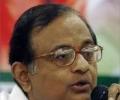
Addressing bankers and economists at Bancon 2013, a flagship event of the Indian Banks' Association, Chidambaram told the lenders to deal firmly with wilful defaulters, but handhold those who are reeling under the impact of the economic slowdown.

M Govinda Rao hopes the Budget will contain the deficit while continuing to create conditions for pushing growth.

'Investors should consider small and midcaps only if they can handle volatility and have a longer investment horizon.'

'Kindling the private sector's animal spirits is more important than focusing on how government can give jobs on its own.'

The finance ministry on Wednesday said the government will borrow Rs 4.34 lakh crore in the second half of the current fiscal to meet its expenditure requirement amid COVID-19 crisis afflicting the country's economy.

The Indian economy is recovering from the slowdown in momentum witnessed in the September quarter, driven by strong festival activity and a sustained upswing in rural demand, according to a Reserve Bank of India (RBI) bulletin released on Tuesday. An article on the 'State of the Economy' in the December bulletin noted that the global economy continues to exhibit resilience with steady growth and moderating inflation.

The income tax department estimates total collection to be between Rs 10.5 trillion and Rs 10.7 trillion against the revised target of Rs 11.7 trillion.
Now, experts say strains on fiscal deficit are coming from the revenue side and the administration should, if anything, step up expenditure to prop up the economy that is slowing down.

Surplus in March, the last month of a financial year, has helped the government reduce fiscal deficit in the last few years.

The government's initiative to migrate SEZ data from NSDL software to ICEGATE system for streamlined reporting of import data caused double counting of gold imports, resulting in inflated figures and the issue has now been largely rectified, government sources said. The downward revision has provided the actual picture of trade deficit (difference between imports and exports), which was earlier looking very high. The deficit for November will now be revised downwards from $37.84 billion to about $32.8 billion. Similarly, there will be a revision in overall import numbers as well.
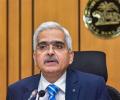
The RBI raked in a massive net income gain from foreign exchange currency sales as a buffer for the rupee during tumultuous geopolitical upheavals last year owing to Russia's invasion of Ukraine.

While the bigger burden of increase in revenue collection would fall upon the indirect taxes, on the direct taxes there could be rationalization & simplification.
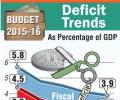
Finance Minister Arun Jaitley presented the Budget today.

India's merchandise exports in June rose by 16.78 per cent year-on-year to $37.94 billion while the trade deficit ballooned to a record $25.63 billion on account of a steep increase in gold and crude oil imports, according to the government's preliminary data released on Monday. The export growth in June moderated from 20.55 per cent in May and 48.34 per cent in June 2021. During the month under review, exports of engineering, pharmaceutical and plastic products recorded negative growth.

The state's revenue receipts might not afford various freebies announced by the parties, unless revenue deficit and hence fiscal deficit is widened.

Since Sanjay Malhotra took office as governor in December, the Reserve Bank of India (RBI) has adopted a more accommodative stance, which bodes well for banking and the economy as they navigate a growth slowdown, according to analysts.

Indian economy is expected to improve marginally in the current financial year with its GDP at market price projected to expand by 3.4 per cent from 3.3 per cent in the previous fiscal, think tank OECD said.

'There is also a possibility that Andhra Pradesh may demand a similar package. But as of now, we are only working on a package for Bihar.'

Haryana has done well in terms of economic growth over the last couple of decades. For it to continue to lead the growth ladder, the new government has to work hard on multiple dimensions, recommend Shishir Gupta and Rishita Sachdeva.
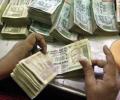
The new government may enhance the Plan expenditure for 2014-15 by around Rs 11,000 crore (Rs 110 billion) in the Budget next month, which would be about 2 per cent higher than what was provided in the previous fiscal budget.

Sitharaman does away with loans from National Small Savings Fund to Food Corporation of India.
India's exports rose marginally by 1.62 per cent to $33.92 billion, while trade deficit more than doubled to $27.98 billion in August due to increased crude oil imports, commerce ministry data said on Wednesday. The revised data showed that imports rose by 37.28 per cent to $61.9 billion in August this year. The preliminary data released by the ministry on September 3 had shown a 1.15 per cent decline in exports to $33 billion in August.

People from different sectors react to Budget 2013

Dr T V Somanathan is the first finance secretary to be appointed Cabinet secretary since 1985. His appointment at this juncture seems to carry much meaning for the forthcoming trajectory of reforms and restructuring of India's steel frame.

The Indian economy has recovered 'handsomely' from the pandemic-induced disruptions, former Niti Aayog vice chairman Arvind Panagariya said on Tuesday, while expressing hope that the recovery will be sustained and the growth rate of 7 to 8 per cent will be restored. Panagariya suggested that the government must now signal its intention to wind down fiscal deficit by cutting it by half-to-one percentage point in 2022-23. "The Indian economy has recovered handsomely, returning to its pre-COVID GDP... "Only private consumption is still below its pre-COVID-19 level," the eminent economist told PTI in an interview.

India Ratings on Mondy projected a 7.7 per cent growth this fiscal driven by consumption demand.

'Why has Maharashtra slipped up over the past couple of decades?' 'Not only is this question critical for residents of the state, but given that it accounts for 14% of India's GDP, a faster-growing Maharashtra implies a faster-growing India as well, point out Shishir Gupta and Rishita Sachdeva.

By any economic theory or doctrine, this is no Budget that supports economic recovery, whether through supporting aggregate demand, or through expansionary stimulus, declares Rathin Roy.
